Morphic Resonance
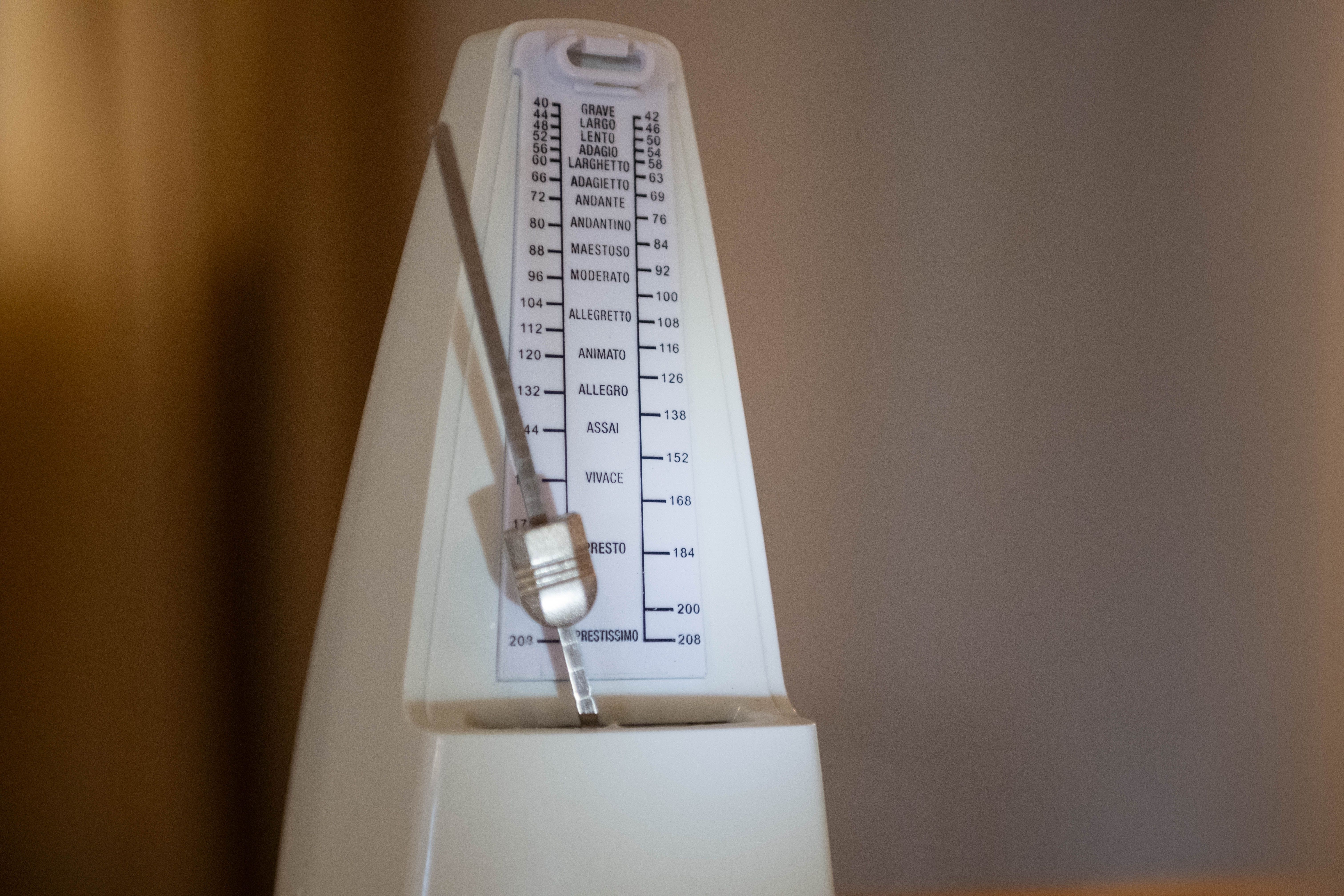
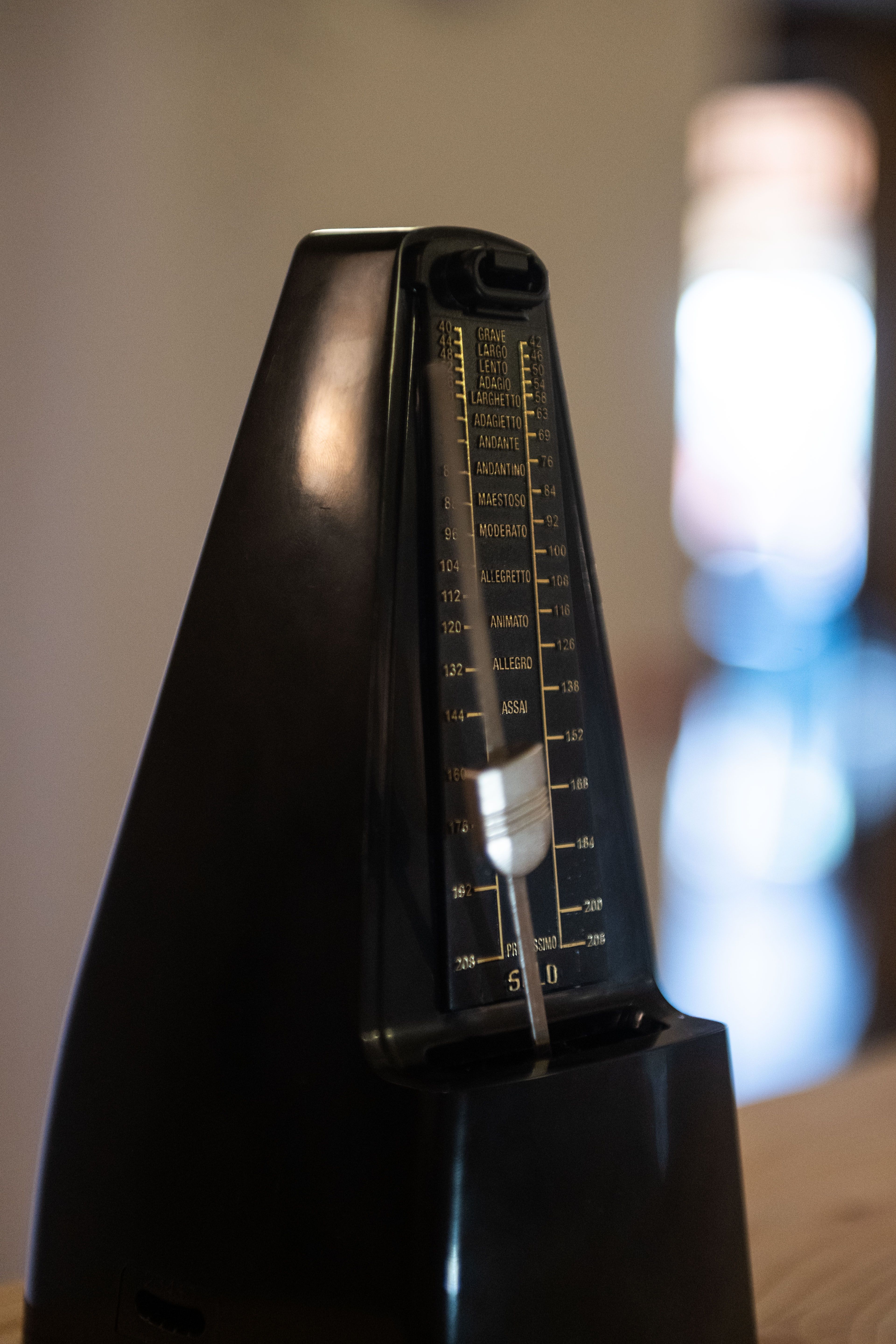
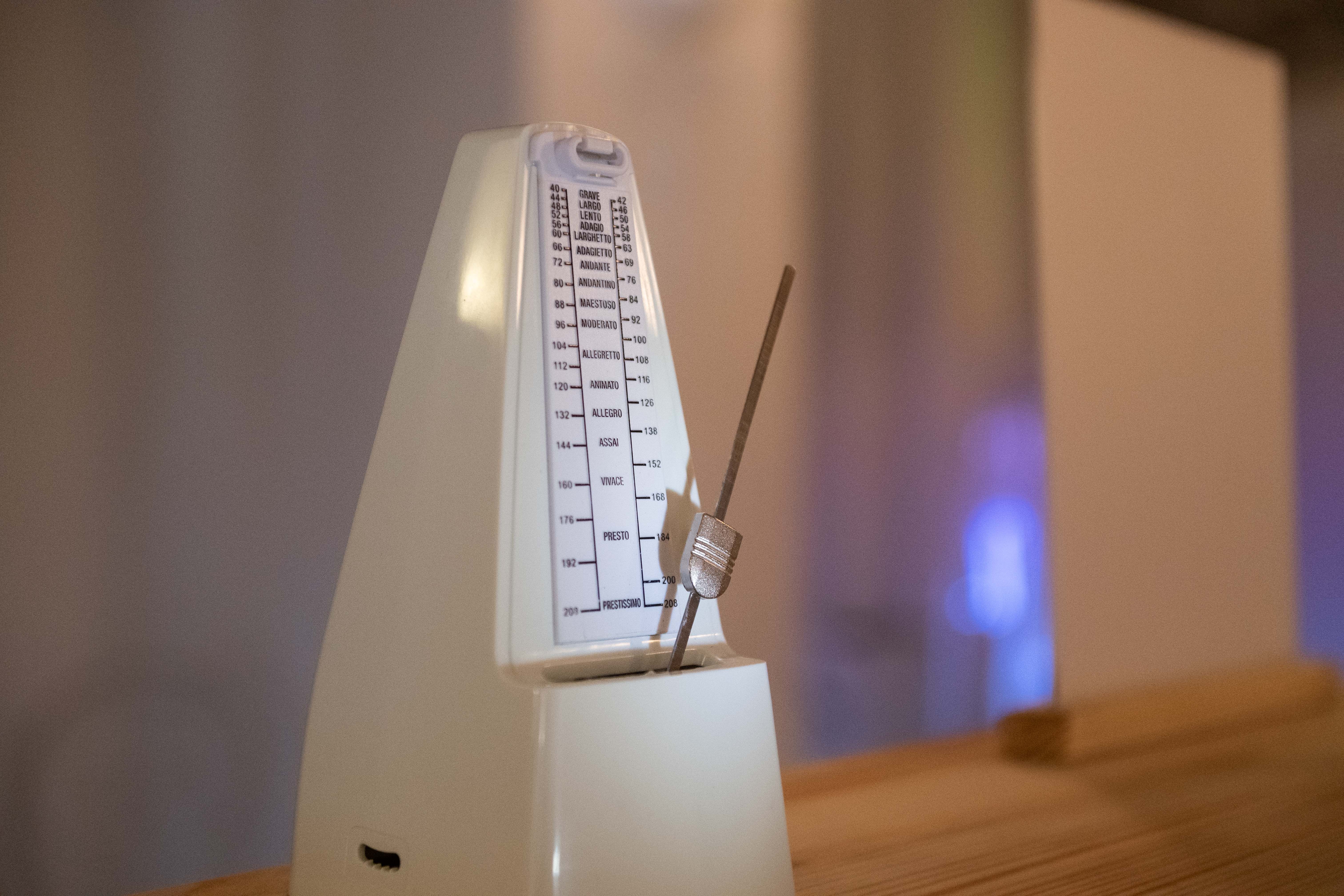
This installation takes its name from Rupert Sheldrake's theory of Morphic Resonance: the proposition that similar systems in nature accumulate a collective memory across time — not through physical inheritance but through fields that condense repetition into pattern. The metronome is already such an object. Centuries of time-keeping have encoded its swing with expectation; it arrives as a familiar symbol of regularity before it arrives as sound.
When a moving object is sampled at less than twice its own frequency, the brain reconstructs what it cannot see. The pendulum appears to freeze, drift backward, or split into ghost copies. Acoustic and visual reality diverge: the ear registers speed; the eye insists on stillness.
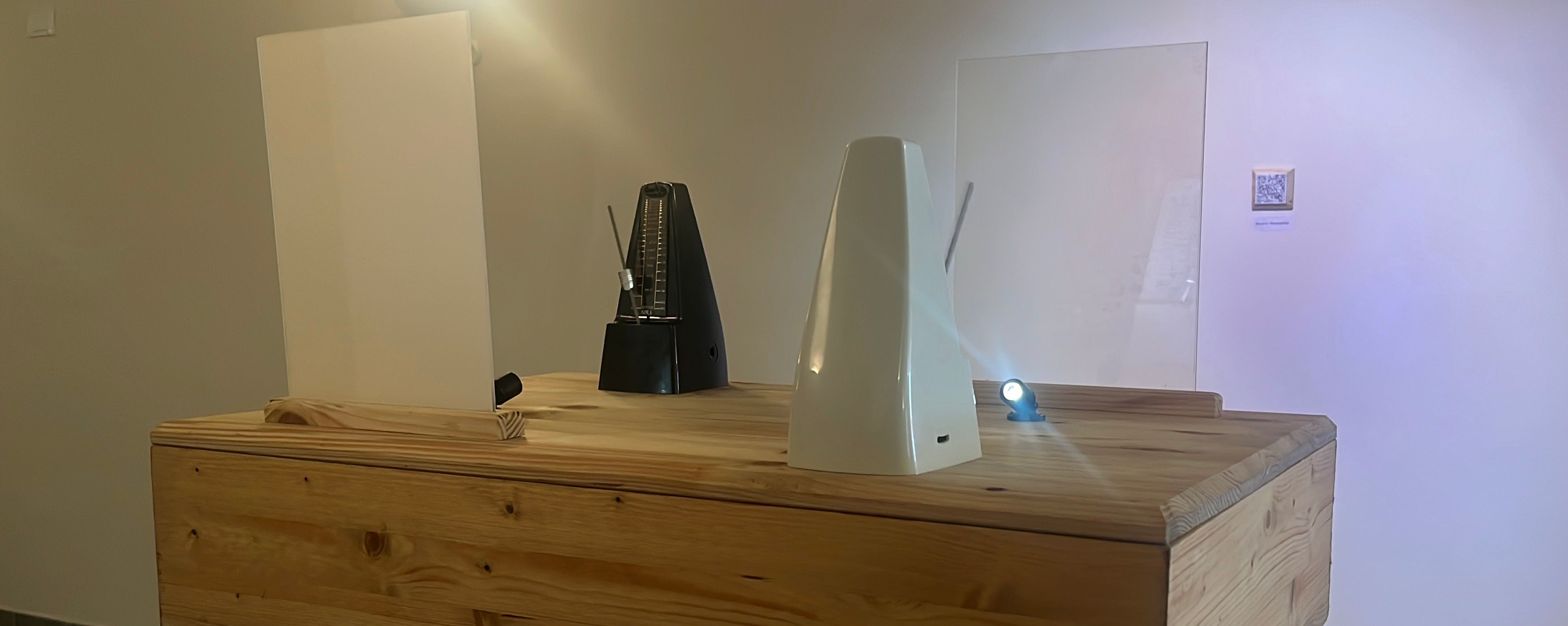
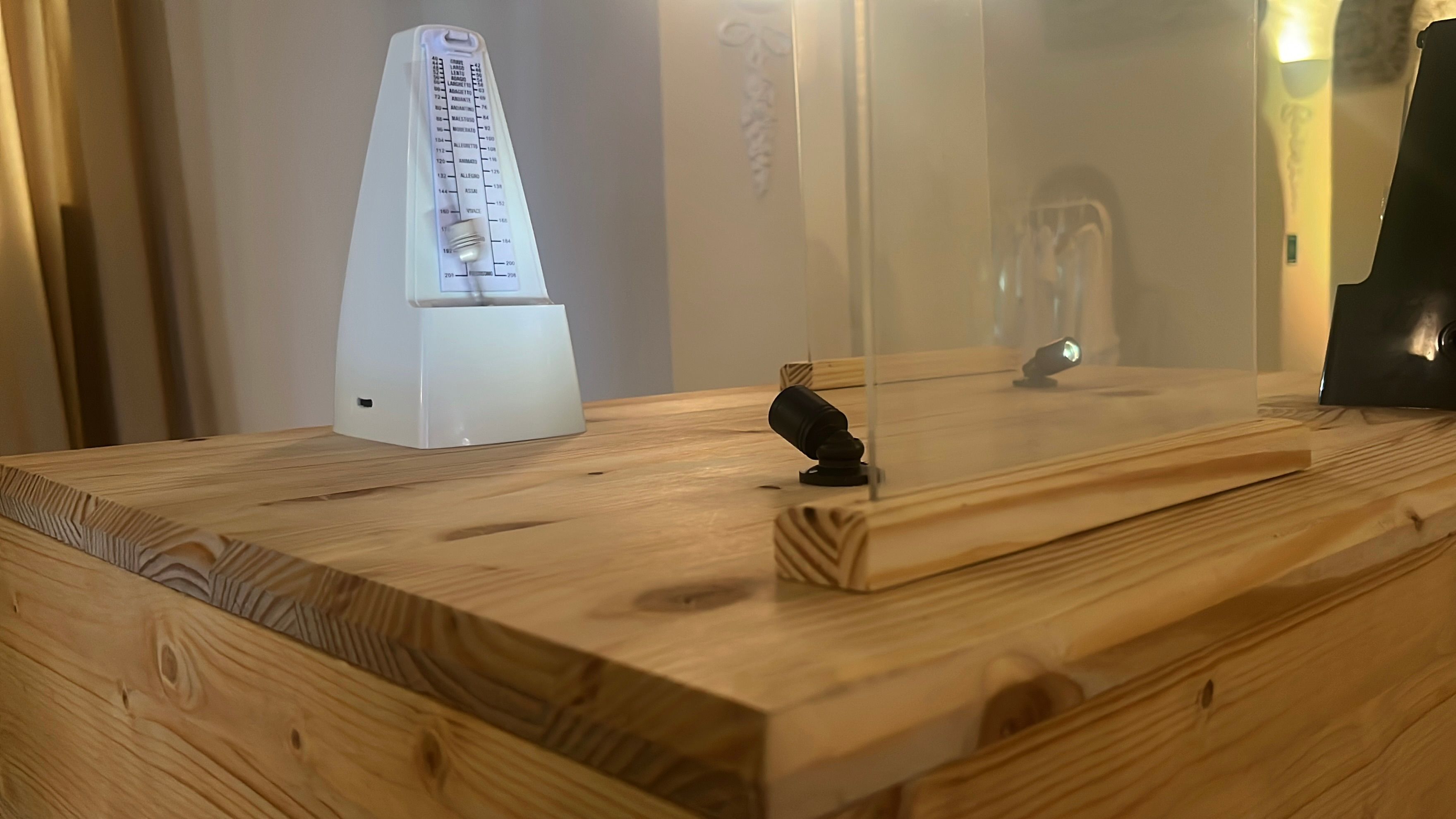
Two motorised pendulums are mounted either side of a glass panel that switches between opacity and transparency in synchrony with their tempo. As the sequence escalates through interlocking polyrhythmic intervals, the stroboscopic field cycles in and out of phase with each pendulum's movement — locking, drifting, reversing, shimmering — until the pendulum vanishes into the rhythm that was measuring it.
The machine is precise. The perception is not.
Special thanks to:
Lorenzo Tomasucci
Rachele Cominella
Emanuele Tarducci
Francesca Gollo
Photo's courtesy of Claudia Rolando - RUFA
INTERACTIVE_3D_SCAN